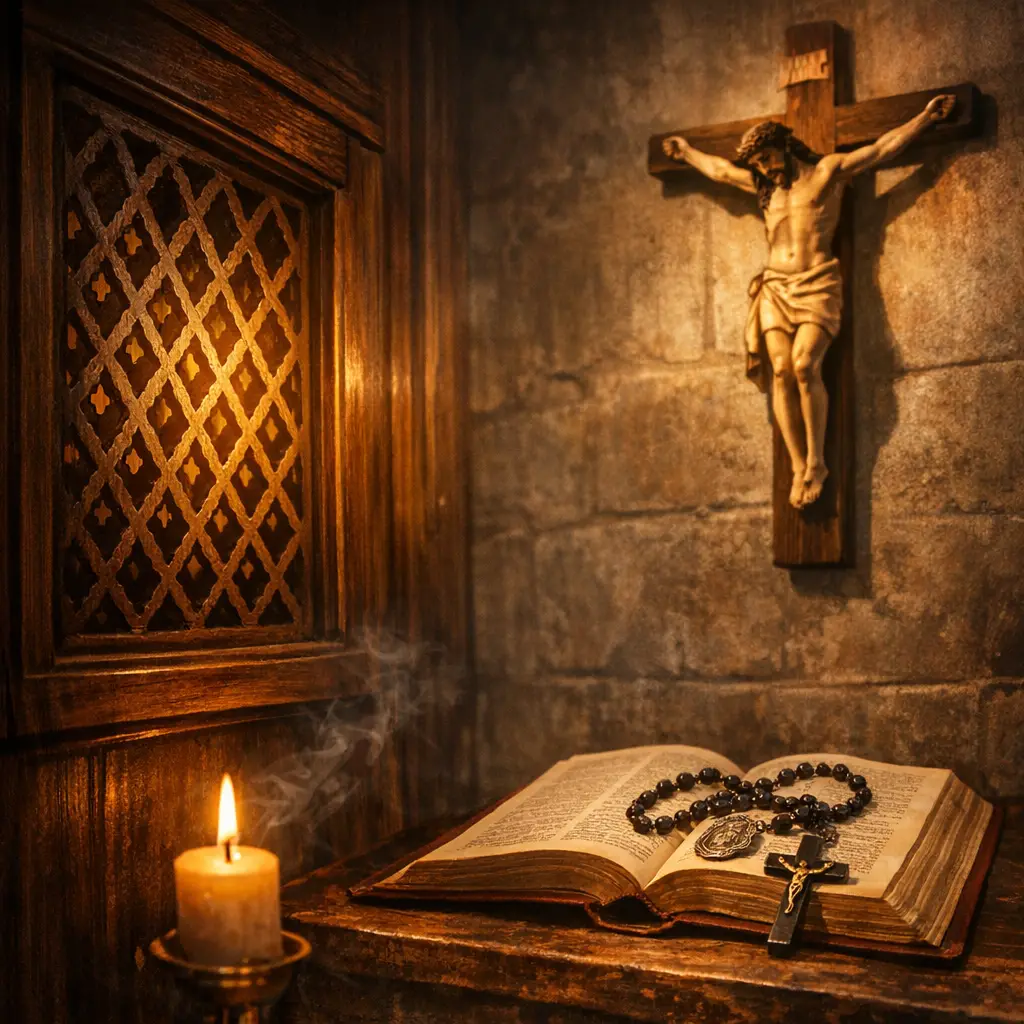

Confiteor
Confiteor helps you prepare for the Sacrament of Confession through a private, prayerful examination of conscience made in the light of the Word of God—so you can form real contrition and be ready to go to sacramental confession. Confession of everyday faults (venial sins) is strongly recommended, and regular confession helps you form your conscience, fight evil tendencies, let you be healed by Christ, and progress in the life of the Spirit through the Father's mercy.

How to Prepare
Prepare through an examination of conscience made in the light of the Word of God. Bring quiet attention to yourself so you can hear your conscience and reflect honestly. Then form real contrition—sorrow of the soul and detestation for the sin committed, together with the resolution not to sin again—because contrition occupies first place among the penitent's acts. Let your contrition include a firm resolution to have recourse to sacramental confession as soon as possible. Ask God for the grace to see your sins clearly and to be truly sorry before Him.
If it has been a long time since your last confession, start with Confession Help for a simple guide on what to do.
Find a Church Near You
When you are ready to go to Confession, it helps to know where to go and when Confession is offered. Use MassTimes.org to find a nearby Catholic church and posted confession times. This makes it easier to plan ahead, choose a parish, and arrive with peace of mind. Confiteor can help you prepare; sacramental confession happens in the sacrament itself.
What You Will Find Here
- ✓ Web-first preparation for a private and prayerful examination of conscience
- ✓ A guided path to Confession with clear, practical steps
- ✓ A church-finding resource through MassTimes.org for nearby Mass and Confession times
- ✓ Guidance for real contrition and preparation to have recourse to sacramental confession
Learn about the meaning of the name, why confession matters, and what this site is and is not. The confession (or disclosure) of sins frees you and facilitates reconciliation with others by opening you again to God and to the communion of the Church.
Important Disclaimer
Confiteor is a preparation aid to help you make an examination of conscience made in the light of the Word of God and to form real contrition—sorrow of the soul and detestation for the sin committed, together with the resolution not to sin again.
It is not the Sacrament of Penance, does not absolve sins, and cannot replace sacramental confession with a priest.
To receive absolution, you must go to a priest and celebrate the sacrament of confession.